
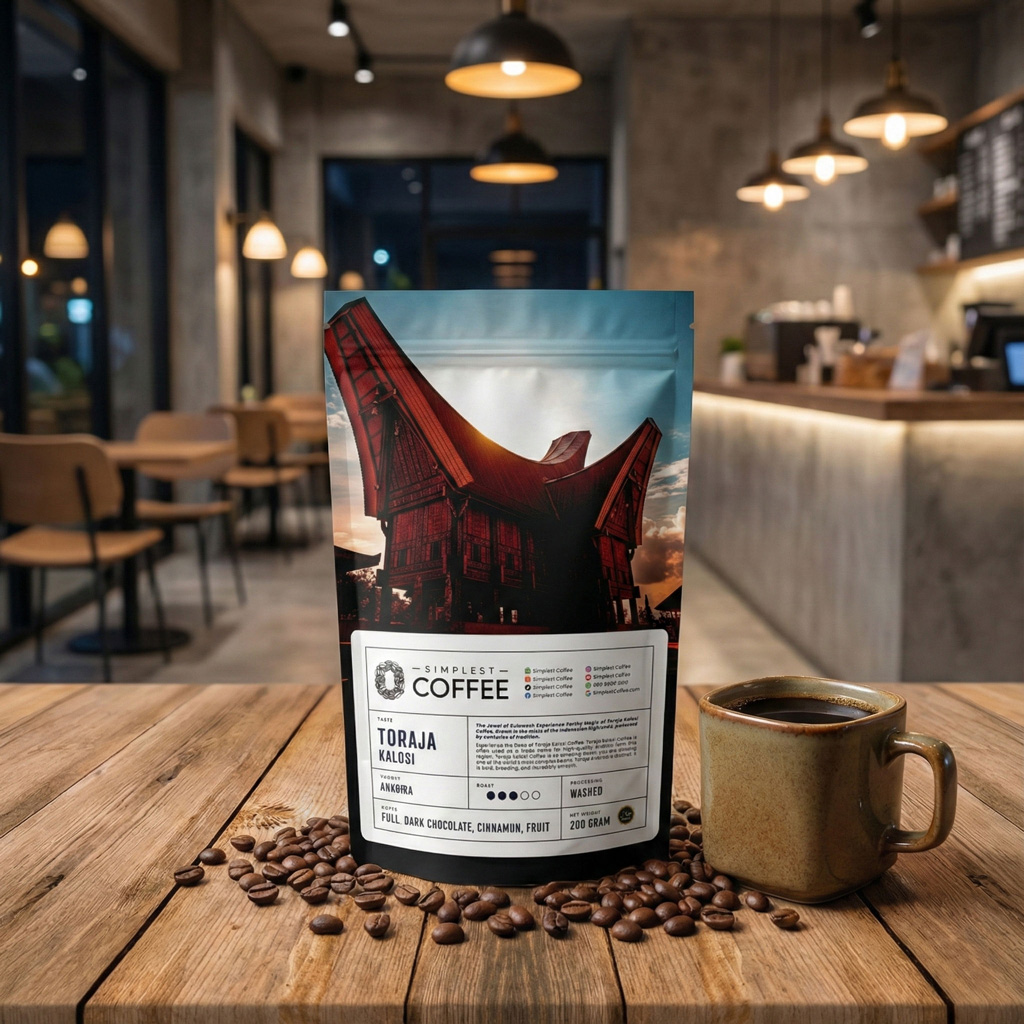
Toraja Kalosi Coffee
Price range: Rp100.000 through Rp400.000
Toraja Kalosi Coffee is often used as a trade name for high-quality Arabica form this region. Toraja Kalosi Coffee is so amazing flavor, you are drinking one of the world’s most complex beans.
Toraja Arabica is distinct. It does not taste like African or South American coffee. It is bold, brooding, and incredibly smooth.
- Acidity: Very Low (Muted). This makes it gentle on the stomach.
- Body: Full, heavy, and syrupy.
- Flavor Notes:
– Primary: Dark chocolate, ripe fruit, and cedar.
– Secondary: Earthy spices (cinnamon, cardamom) and occasional herbal undertones.
– Aftertaste: Long, sweet, and clean—unlike the “dirty” aftertaste of lower-grade earthy coffees.
The Jewel of Sulawesi: Experience Earthy Magic of Toraja Kalosi Coffee
Experience the Deep of Toraja Kalosi Coffee. Grown in the mists of the Indonesian highlands, perfected by centuries of tradition.
Introduction: What is Toraja Kalosi Coffee?
The Tana Toraja region in the mountainous highlands of South Sulawesi. This is where the coffee is actually grown, often at altitudes of 1,400 to 2,000 meters above sea level. The region is famous for its unique culture and boat-shaped traditional houses (Tongkonan).
Toraja Kalosi Coffee is often used as a trade name for high-quality Arabica form this region. Toraja Kalosi Coffee is so amazing flavor, you are drinking one of the world’s most complex beans.
A History & Heritage
A Legacy Brewing Since the 17th Century
Coffee cultivation in Sulawesi dates back to the mid-1700s when the Dutch East Indies Company arrived. The volcanic soil and high altitude of the Sulawesi interior were deemed perfect for Arabica plants.
By the late 19th century, “Kalosi” coffee had become a favorite in Europe, prized for its richness compared to the lighter Latin American coffees. However, following World War II and the struggle for Indonesian independence, the industry quieted down.
The Revival: In the 1970s and 80s, Japanese coffee importers rediscovered the region. They invested heavily in infrastructure and quality control, helping Toraja coffee regain its status as a premium, world-class commodity. Today, it is considered the “Queen of Indonesian Coffee.”
The Farmers & Processing
Grown by Families, Not Corporations
In Tana Toraja, coffee is rarely grown on massive industrial plantations. Instead, it is grown by smallholder families in their backyards or small garden plots, often shaded by clove and cacao trees.
The Wet Hulling Method
The secret to the Toraja taste lies in the processing method known as Wet Hulling (Giling Basah).
1. Farmers pick red cherries and remove the skin.
2. The beans are fermented overnight and washed.
3. Crucial Step: The parchment is removed while the beans still have a high moisture content (30-50%).
4. The naked beans are dried in the sun.
This process gives the raw beans a unique bluish-green color and creates the heavy body and low acidity the coffee is famous for.
What Does Toraja Kalosi Coffee Taste Like?
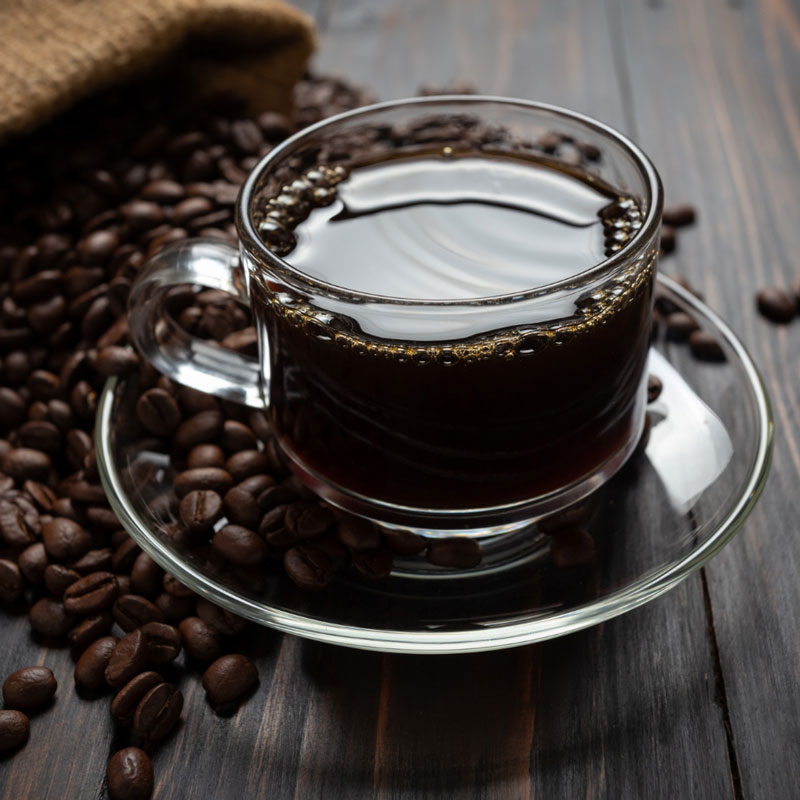
Toraja Arabica is distinct. It does not taste like African or South American coffee. It is bold, brooding, and incredibly smooth.
- Acidity: Very Low (Muted). This makes it gentle on the stomach.
- Body: Full, heavy, and syrupy.
- Flavor Notes:
– Primary: Dark chocolate, ripe fruit, and cedar.
– Secondary: Earthy spices (cinnamon, cardamom) and occasional herbal undertones.
– Aftertaste: Long, sweet, and clean—unlike the “dirty” aftertaste of lower-grade earthy coffees.
Roast Recommendation: It shines best at a City+ (Medium Dark) to Vienna (Dark) roast. The darker roasts bring out the chocolate and spice notes without turning bitter.
How to Brew the Perfect Cup of Toraja Kalosi Coffee
Because of its heavy body, Toraja coffee is versatile.
- French Press (The Best Choice): The metal mesh allows the coffee’s natural oils to remain in the cup, accentuating the thick, syrupy body and chocolate notes.
- Pour Over (V60/Kalita): Use this if you want to highlight the subtle herbal and fruity notes. It produces a cleaner, lighter cup.
- Espresso: Toraja makes a fantastic single-origin espresso with a thick crema and a taste resembling liquid dark chocolate.
| Size | 200g, 500g, 1000g |
|---|---|
| Roast | Medium |
| Processing | Washed |
| Taste | Full Body, Bold, Smooth, Low Acid, Dark Chocolate, Ripe Fruit, Cedar, Spices, Sweet. |
| Variety | Arabica |
| Altitude | 1400-2000 meters |
Related products
-
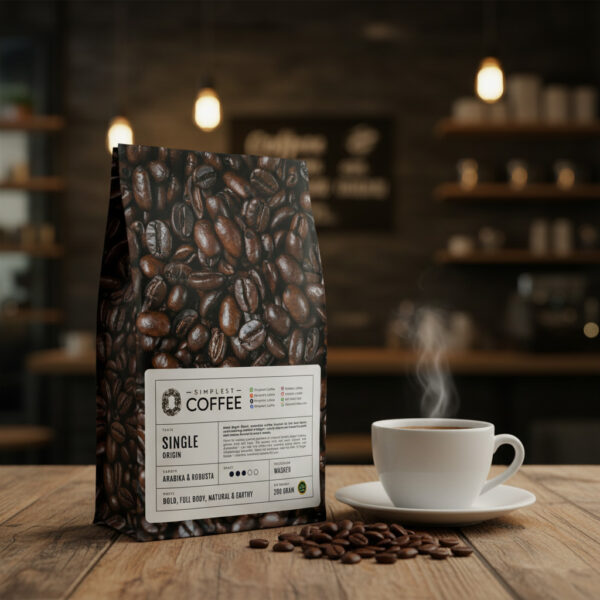
Java Coffee
Price range: Rp100.000 through Rp400.000 Select options This product has multiple variants. The options may be chosen on the product page -
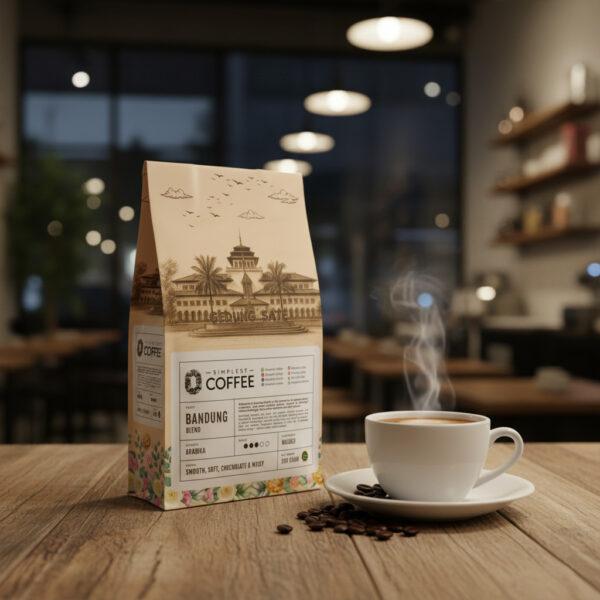
Simplest Coffee Bandung Blend
Price range: Rp60.000 through Rp200.000 Select options This product has multiple variants. The options may be chosen on the product page -
Lampung Robusta Coffee
Price range: Rp100.000 through Rp400.000 Select options This product has multiple variants. The options may be chosen on the product page -
Java Preanger Coffee
Price range: Rp100.000 through Rp400.000 Select options This product has multiple variants. The options may be chosen on the product page
Reviews
There are no reviews yet.